Commercial kitchens demand reliable heat control with steady output. Many operators compare advanced steaming systems with older heated chambers to improve results while lowering waste. The combi steam oven supports balanced moisture with dry heat for flexible preparation. Buyers often weigh energy use, space needs, staff skills, upkeep effort, and cooking results before choosing equipment that fits daily demand while maintaining stable quality across varied tasks.
What makes cooking control different?
Steam-assisted systems manage humidity and temperature together for stable results across loads. Heat-only units rely on fixed air movement that dries surfaces faster. This affects texture, yield, and repeatability. Kitchens handling volume often value moisture balance for predictable timing, while simpler chambers suit limited menus.
Which option saves more energy?
Combined steam systems use targeted heat cycles that reduce waste. Shorter warm-up times lower power draw. Standard heated chambers may stay active longer to reach targets. Over time, efficient cycles reduce monthly costs while supporting greener operations without complex adjustments.
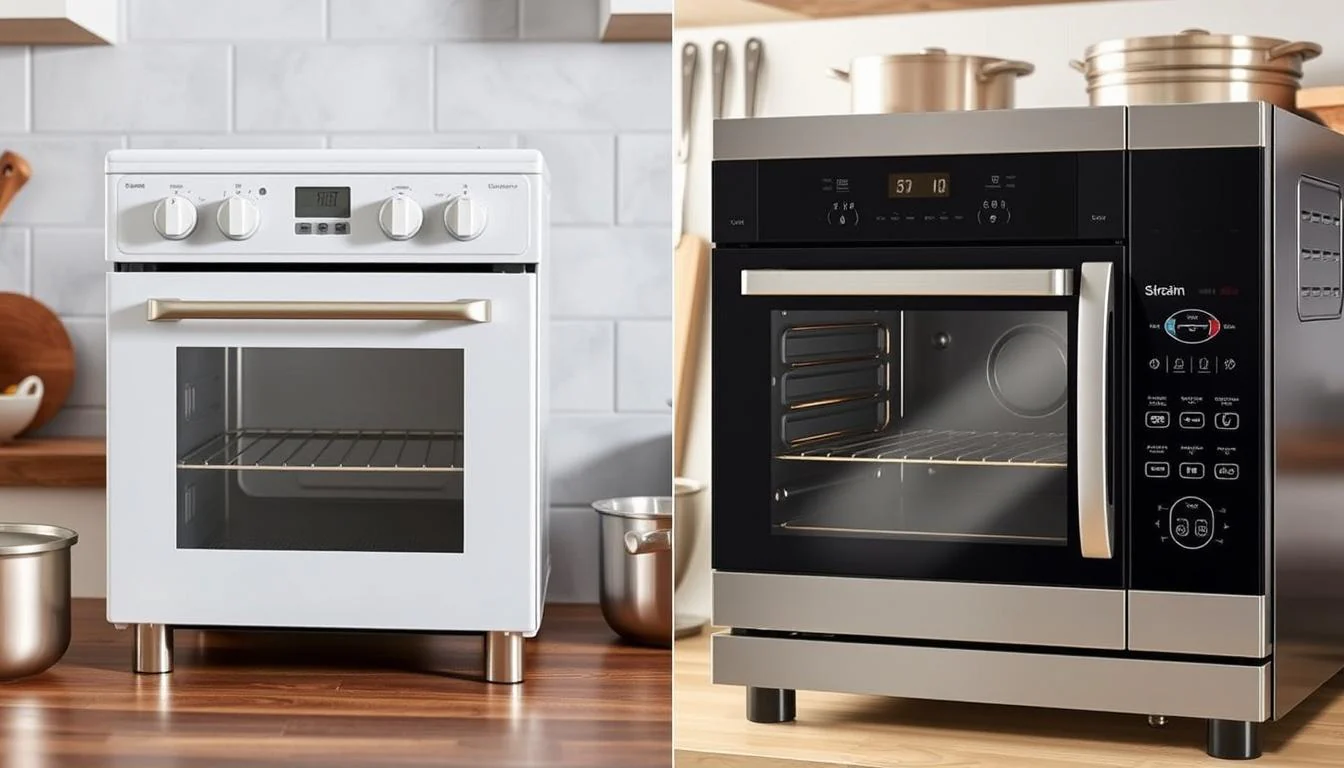
When is the budget the main factor?
Cost-focused buyers may choose basic heat units with a lower entry price.
- Initial spend stays limited while output meets simple menus during steady service hours without frequent menu changes.
- Fewer connections reduce setup expense and speed opening timelines for small operations.
- Manual control suits skilled cooks comfortable managing heat through experience.
- Maintenance costs remain predictable with standard parts and service routines.
- Suitable for kitchens with limited power capacity and tight layout space.
What about cleaning and upkeep?
Automated wash cycles simplify care and reduce downtime. Smooth interiors limit buildup. Older chambers require manual scrubbing that takes time. Easier upkeep protects hygiene standards and extends equipment life with less effort.
Is installation more complex?
Steam-based systems need water and drainage connections with proper setup. Planning avoids issues later. Basic chambers install faster with fewer requirements. Choosing depends on site readiness and long-term efficiency goals.
Which choice fits long-term growth?
Future-focused kitchens favor scalable systems that support menu growth.
- Moisture control improves consistency as volume increases across multiple service periods daily.
- Presets reduce training time when teams expand quickly.
- Energy savings support rising utility costs over the years.
- One unit replaces several tools, freeing space.
- A combi steam oven adapts as demand changes without replacement.
Selecting the right heated chamber depends on goals, resources, and growth plans. Teams seeking control yield and flexibility benefit from steam-assisted systems. Those with narrow menus and tight funds may prefer simpler heat units. Assess daily volume, staffing skill, and future expansion before investing. The combi steam oven supports consistent results, lower waste, and adaptable cooking paths when long-term efficiency matters most.


