The Week 11 showdown between the Green Bay Packers and the New York Giants delivered an intense battle on both sides of the ball. With a final score of 27‑20 in favor of Green Bay, the game showcased how player performance metrics, situational execution, and key plays shaped the result. This article provides a comprehensive breakdown of the player stats, including passing, rushing, and defensive contributions, as well as game-changing moments and fantasy football insights.
Game Overview
The Packers entered the matchup looking to solidify their playoff positioning, while the Giants aimed to remain competitive in a tightly contested NFC schedule. Though the Giants outgained Green Bay in total yardage, situational efficiency and strategic execution gave the Packers the edge.
This game illustrated that raw numbers alone rarely tell the full story. Advanced metrics such as third-down conversion, red-zone efficiency, and turnover differential were decisive in determining the outcome.
Passing Metrics and Quarterback Performance
Green Bay Packers: Jordan Love
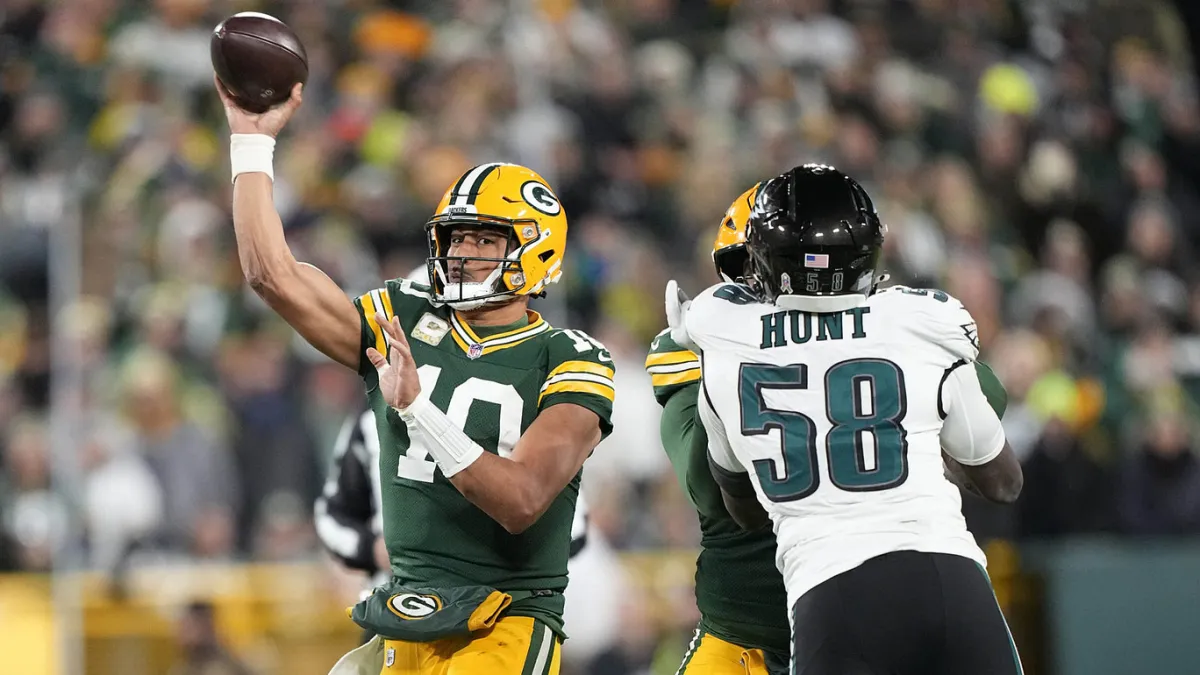
Quarterback Jordan Love completed 13 of 24 passes for 174 yards and two touchdowns. Key insights from his performance:
- Third-down conversion rate: 3 of 5
- Red-zone efficiency: 2 touchdown passes from 3 attempts
- Passing under pressure: 7 of 10 completions
Love’s ability to maintain composure on crucial downs ensured the Packers sustained drives, limiting the Giants’ opportunities for momentum-shifting plays.
New York Giants: Jameis Winston
Jameis Winston completed 19 of 29 passes for 201 yards and added a rushing touchdown. Despite impressive yardage, Winston’s advanced stats reveal areas of concern:
- Turnovers: 1 interception late in the fourth quarter
- Third-down conversion: 4 of 9
- Red-zone efficiency: 1 touchdown from 2 trips
Winston’s yardage production was solid, but situational metrics such as turnovers and third-down failures ultimately hampered New York’s scoring opportunities.
Receiving Insights
Packers
Christian Watson emerged as the primary target:
- Receptions: 5
- Yards: 64
- Touchdowns: 2
- Yards after catch (YAC): 27
Other receivers contributed consistently, helping the Packers maintain spacing and challenging the Giants’ secondary.
Giants
Isaiah Hodgins (5 receptions for 57 yards) and Wan’Dale Robinson (4 receptions for 36 yards) provided reliable yardage, but neither managed to produce a touchdown, highlighting a red-zone struggle for the Giants.
Rushing Metrics and Ground Game Analysis
Packers
Green Bay utilized a balanced rushing attack:
- Aaron Jones: 19 carries for 89 yards
- Emmanuel Wilson: 40 yards and 1 touchdown
- Average yards per carry: 4.7
The combination of Jones’ consistency and Wilson’s short-yardage efficiency allowed the Packers to control clock management and keep the Giants’ defense guessing.
Giants
New York’s rushing highlights:
- Devin Singletary: 2 touchdowns
- Tyrone Tracy Jr.: key first-down runs
- Average yards per carry: 4.2
While effective in the goal-line and short-yardage situations, the Giants’ rushing attack couldn’t consistently set up passing plays, limiting overall offensive efficiency.
Defensive Performance Metrics
Packers Defense
Green Bay’s defense excelled in high-leverage situations:
- Interceptions: 1 (Evan Williams, fourth quarter)
- Sacks: 3, including critical third-down pressures
- Passes defended: 5
The defense’s ability to disrupt Winston’s timing and limit explosive plays was a key factor in the final 27‑20 result.
Giants Defense
New York showed flashes of defensive strength:
- Total pressures: 4 on Jordan Love
- Tackles for loss: 6
However, inconsistent coverage and missed assignments in the red zone allowed Green Bay to capitalize on scoring opportunities.
Total Yardage and Efficiency Metrics
- Packers: 296 total yards (balanced 174 passing / 122 rushing)
- Giants: 336 total yards (201 passing / 135 rushing)
Despite being outgained, Green Bay’s superior efficiency in critical situations—especially third downs and red-zone scoring—explains how they secured the win. Situational metrics underscore that winning key moments is more important than total yardage alone.
Third-Down & Red-Zone Performance
- Packers converted a higher percentage of third downs
- Green Bay excelled in red-zone scoring opportunities, while the Giants struggled to finish drives with touchdowns
Efficiency in these key situations was critical for determining the outcome.
Turnovers and Momentum Shifts
- Packers forced 1 turnover
- Giants committed 1 critical interception in the final minutes
The turnover differential and timing were pivotal in determining momentum. Evan Williams’ interception and the Packers’ third-down conversions prevented the Giants from mounting a late-game comeback.
Special Teams Contributions
Special teams influenced field position and scoring opportunities:
- Packers’ punt coverage limited Giants’ average return to under 7 yards
- Extra points and field goals were executed efficiently by both teams
- Strategic kickoffs and punts helped Green Bay control possession
Even subtle metrics, such as return yards allowed, played a part in maintaining the Packers’ advantage.
Top Performers and Impact Players
Packers
- Christian Watson: Two touchdowns, high YAC, consistent reliability
- Aaron Jones: Clock control and rushing efficiency
- Evan Williams: Game-changing interception
For readers seeking an in-depth review of week 11 NFL Packers vs Giants players check out detailed stats breakdown. It highlights passing, rushing, and defensive stats for all key contributors, showing how each metric influenced the game.
Giants
- Devin Singletary: Effective short-yardage and goal-line performance
- Jameis Winston: Yardage distribution strong but turnovers impacted efficiency.
Game-Changing Moments
- Watson’s fourth-quarter touchdown put the Packers ahead for good
- Evan Williams’ interception halted a Giants drive in the final minutes
- Green Bay’s third-down conversions in clutch situations
- Winston’s interception late in the game
These moments illustrate how situational execution and individual player metrics directly shaped the final outcome of 27‑20.
Fantasy Football Takeaways
- Christian Watson: Reliable scoring efficiency makes him a strong fantasy asset
- Aaron Jones: Consistent points-per-game contributor
- Devin Singletary: High-value goal-line usage in PPR formats
- Jordan Love: Solid QB option for mid-tier fantasy managers
- Jameis Winston: Yardage production promising but risky due to turnovers
High-leverage metrics rather than total yardage were critical for fantasy point evaluation in Week 11.
Season Implications
Packers
The win strengthens Green Bay’s playoff contention, emphasizing:
- Balanced offensive approach
- Efficient red-zone performance
- Defensive execution during critical plays
Giants
The loss underscores areas for improvement:
- Third-down and red-zone efficiency
- Turnover reduction
- Defensive consistency under pressure
Although the Giants produced more yardage, situational inefficiency prevented them from converting metrics into points.
Conclusion
The Week 11 matchup between the Packers and Giants demonstrates how advanced player metrics—passing efficiency, rushing productivity, defensive plays, and situational execution—directly influence NFL outcomes. Green Bay’s ability to capitalize on high-leverage moments outweighed total yardage and secured the 27‑20 victory.
Fans looking to analyze the game further can explore detailed Week 11 performance reports to see how each metric shaped the final result.


